













You open your closet, and there’s genuinely nothing to wear. Not because it’s empty — it’s full. But nothing feels right, nothing goes with anything, and you end up in the same four things while everything else hangs there, collecting regret. That’s not a style problem. That’s a clutter problem. And the only way through it is to deal with it.
The closet detox is a step in building a capsule wardrobe, and it’s the step most people try to skip. But if you don’t clear out first, you’re just adding more noise to the chaos. This is the one session that changes everything — every question, every decision, every bag out the door — so you can finally see what you have and build from there.
“Keeping the dress doesn’t get your money back. It just costs you closet space and mental energy every single morning.”

Why Letting Go Is So Hard
Before we touch a single hanger, we need to name the thing that stops most women before they even start: the guilt.
Sunk cost guilt is the dress you paid $120 for and wore once. Keeping it doesn’t recover the investment — it just makes you feel bad about it every morning you pass it over. The money is already gone. What you’re actually spending now is closet space and mental energy.
Identity clothes are the pieces tied to who you used to be or thought you’d become — the power suits from the corporate era, the going-out dresses from before kids, the fitness gear from the January you were absolutely going to transform your life. Letting them go can feel like letting go of a version of yourself. Acknowledge that. Then make a decision.
Gift guilt is real, but the love someone gave you is not stored in the blouse. You can honor the gesture without keeping something you’ll never wear. And the “just in case” trap — holding onto things for hypothetical futures that never arrive — is just procrastination wearing a bow. If you don’t have a cruise booked, you don’t need the kaftan.
Before You Pull Anything Out
The biggest mistake in a closet detox is starting without a system — pulling everything out, getting overwhelmed, and ending up with a bigger mess than you started with. Set yourself up to finish.
What you need before you begin
- Real time. Block 2–3 uninterrupted hours minimum. Not a Tuesday evening after work. A Saturday morning with coffee and nothing else scheduled.
- Six destinations, ready and labeled before you start: Keep, Donate, Sell, Toss, Repair, and Off-Season Storage. Bags or bins — whatever you have. They need to exist before the first piece comes out.
- Everything comes out. Not “I’ll just do dresses today.” The full picture only works if you can see the full picture. Half-detoxes produce half-results.
- A playlist or a comfort rewatch. Something familiar that keeps you moving without demanding your attention. This is not the time for a new show or a podcast that makes you stop and think.
Do this alone, or with one brutally honest person. Not your mom who wants you to keep everything. You need silence or truth — nothing in between.
The Flowchart: Every Piece Gets a Decision
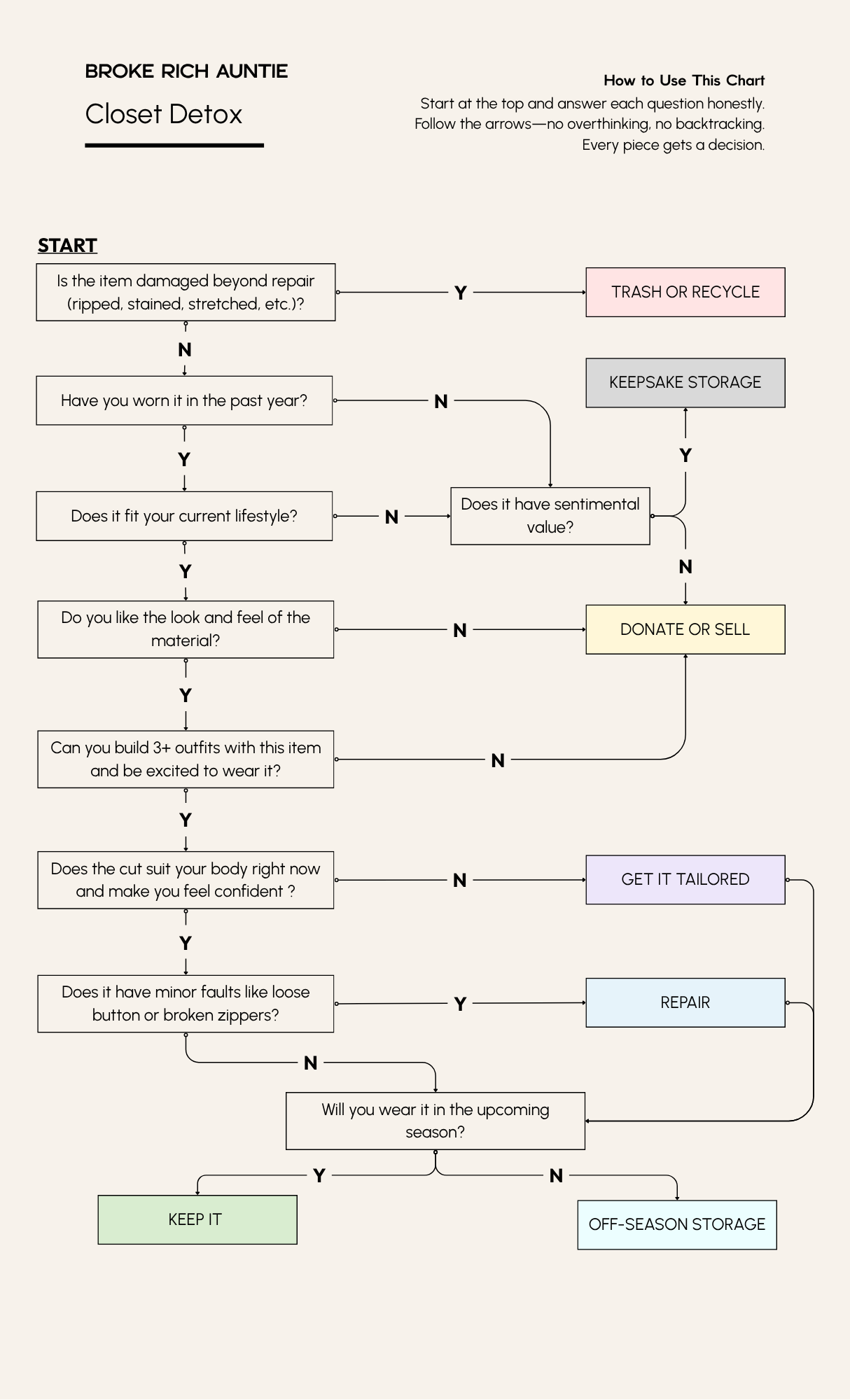
This is the heart of the detox. Pick up every item — every single one — and walk it through these questions in order. No skipping, no “I’ll come back to this one,” no piles of maybes that mysteriously never get decided. Every piece gets a decision today.
🗂️ Download the flowchart at the end of this article to print and use during your detox session. Tape it to your closet door. Follow the arrows. No overthinking, no backtracking.
Question 1 : Is the item damaged beyond repair?
Start here – Ripped, permanently stained, stretched out of shape, fabric pilling beyond recovery. If yes, the answer is immediate: Trash or Recycle. Don’t deliberate on a damaged item. If you haven’t had it repaired by now, you aren’t going to. Let it go, and check whether it can be responsibly recycled through a textile program before it goes in the bin.
Question 2 : Have you worn it in the past year?
Be specific with yourself. Not “I could see wearing this” — did you actually wear it? If yes, keep going. If no, the next question matters: does it have genuine sentimental value? A wedding guest dress, a piece that belonged to someone you loved, something from a meaningful chapter of your life — these go in Keepsake Storage, not your active closet. Everything else that hasn’t been worn in a year moves to Donate or Sell.
Question 3 : Does it fit your current lifestyle?
Not your old job, not the social life you had before, not the version of your routine you keep meaning to get back to. Your actual life, right now. If the answer is no — if it’s a category of clothing that genuinely doesn’t serve how you live — it moves to Donate or Sell. Keeping a closet full of clothes for a life you aren’t living is one of the biggest reasons getting dressed feels so hard.
Question 4 : Do you like the look and feel of the material?
Do you actually like wearing this fabric, or do you spend the whole day pulling at it, adjusting it, feeling vaguely uncomfortable? Clothes you dislike wearing never get worn, no matter how nice they look on the hanger. If the material bothers you, it moves to Donate or Sell. Pay attention to what you do reach for — that information matters when we get to building the capsule.
Question 5 : Can you build 3+ outfits with this item — and are you actually excited to wear it?
A piece that only works with one other thing in your closet isn’t a wardrobe piece, it’s a costume. And a piece you don’t feel genuinely good in is just taking up space. If you can’t build at least three combinations with it — or if your gut response to wearing it is “it’s fine” rather than “yes” — it goes to Donate or Sell. One caveat: intentional statement pieces that anchor a signature look are allowed to be a little less versatile. You know the difference.
Question 6 : Does the cut suit your body right now — and make you feel confident?
Not your body two years ago. Not after you hit whatever goal you’re working toward. Your body today. Clothes that almost fit make you feel worse than wearing nothing. If the cut isn’t right but the piece has real potential — good fabric, good bones — it moves to Get It Tailored. Hemming pants, taking in a waist, adjusting a sleeve: a good tailor transforms how a piece wears. If it’s not worth that investment, it goes to Donate or Sell.
Question 7 : Does it have minor fixable faults?
Loose button, broken zipper, a small hem coming undone. Things that are genuinely easy to fix and that you will actually fix — those go to Repair. Be honest. If it’s been sitting in your closet for six months with the broken zipper, put it in the donate pile. But if it’s a piece you love and the fix is real and doable, this is the pile for it. Set a deadline: repairs happen within two weeks, or they move to Donate.
Question 8 : Will you wear it in the upcoming season?
Final Check – If a piece has made it this far, it’s earned a place in your wardrobe. The last question is timing. If you’ll genuinely wear it in the next few months, it goes in the Keep pile and back into your closet. If it’s seasonal and the season is months away, it goes into Off-Season Storage — properly folded or hung, labeled, and out of your active space until you actually need it.
The Six Destinations — What Each One Actually Means
| Keep Fits your body and life right now. Makes you feel genuinely good. Works with at least three other things. Goes back in the closet with intention. | Donate Local shelters, Buy Nothing groups, a friend with a similar size. Professional wear is especially valuable to career-support organizations. Give it somewhere specific. | Sell Higher-end pieces with life left. Poshmark, ThredUp, Facebook Marketplace. Turn sunk costs into shopping budget for the capsule you’re about to build. |
| Get It Tailored Good piece, wrong fit. Worth the investment. Set a two-week deadline — if it doesn’t happen, it moves to donate. | Repair Loose button, broken zipper, small hem. Easy fix on a piece you love. Same two-week rule applies. | Off-Season Storage Passed every test, wrong time of year. Folded properly, labeled, and out of your active closet until the season turns. |
After the Detox: Resetting the Closet
Put your Keep pile back with intention — organized by category so you can see everything at a glance. Then actually look at what’s left. Three bottoms and twelve tops is your wardrobe telling you something. Note the gaps. They’ll guide exactly what you shop for later.
Before you open a single tab
Live with what’s left for at least one full week before buying anything. You’ll start seeing combinations you never noticed. Shopping from clarity — knowing exactly what’s missing and why — is how you build something that works. Shopping from anxiety just recreates the problem.
Get the bags out the door today. Donate bags in the trunk, sell listings drafted tonight. The detox isn’t done until the items you’re releasing have actually left your space. A donate pile in the corner of your bedroom is just clutter with good intentions.
You Did the Hard Part
Most people think about doing a closet cleanout for months and never actually sit down to do it. You did — and this one session changes how every morning feels for a long time. What you have now is a closet you can see clearly. That’s a completely different starting point for everything that comes next.