














Let me paint you a picture. You’re standing in a store, you pick up a top, it’s a perfectly nice top — good fabric, right price, nothing technically wrong with it — and something still feels off. You buy it anyway. It sits in your closet. You never reach for it. Sound familiar?
Nine times out of ten, it’s a color problem.
Not because you have bad taste. Because nobody told you which colors are actually yours. 
Where this whole thing comes from
Color analysis has been around longer than TikTok would have you believe. The framework most people are working from today traces back to Carole Jackson’s 1980 book Color Me Beautiful, which laid out the idea that every person’s natural coloring — your skin, hair, and eyes together — harmonizes with a specific family of colors. Jackson organized those families by season, and the concept took off. What started with women getting colored fabric draped across their shoulders in department stores has since evolved into a full industry: online consultations, elaborate sub-season breakdowns, and yes, a very passionate corner of the internet that will debate your season in the comments.
The four seasons, quickly
The system is built on four categories. Each one is defined by the warmth, depth, and clarity of your natural coloring — not your skin tone alone, but the whole picture.
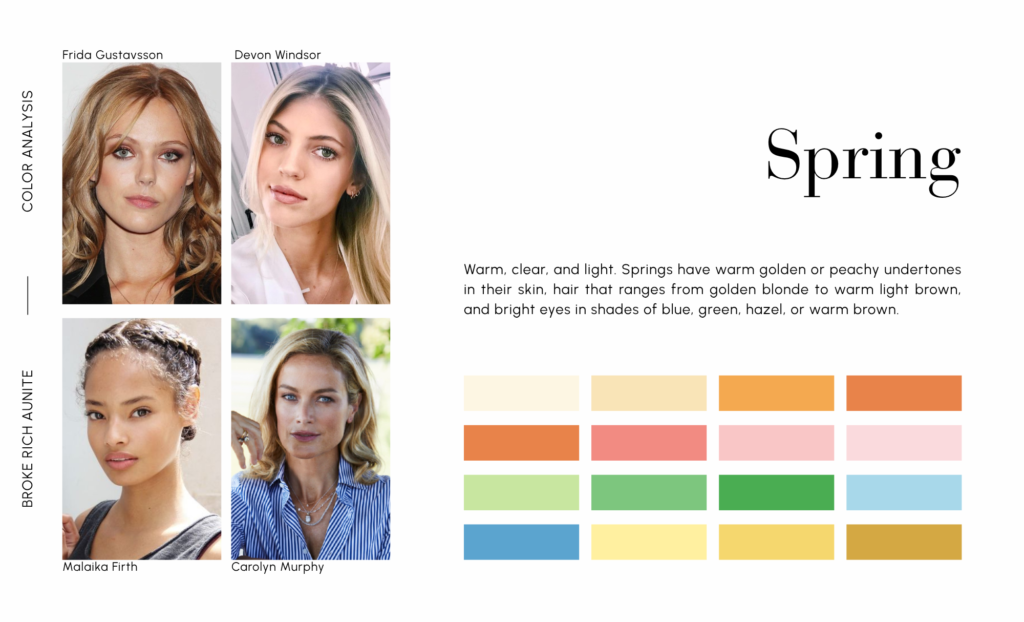
Spring is warm, clear, and light. If you’re a spring, you glow in colors that feel like a warm morning — think peachy corals, golden yellows, warm greens, and bright sky blues. Your coloring has an aliveness to it that cool, muddy tones tend to kill.
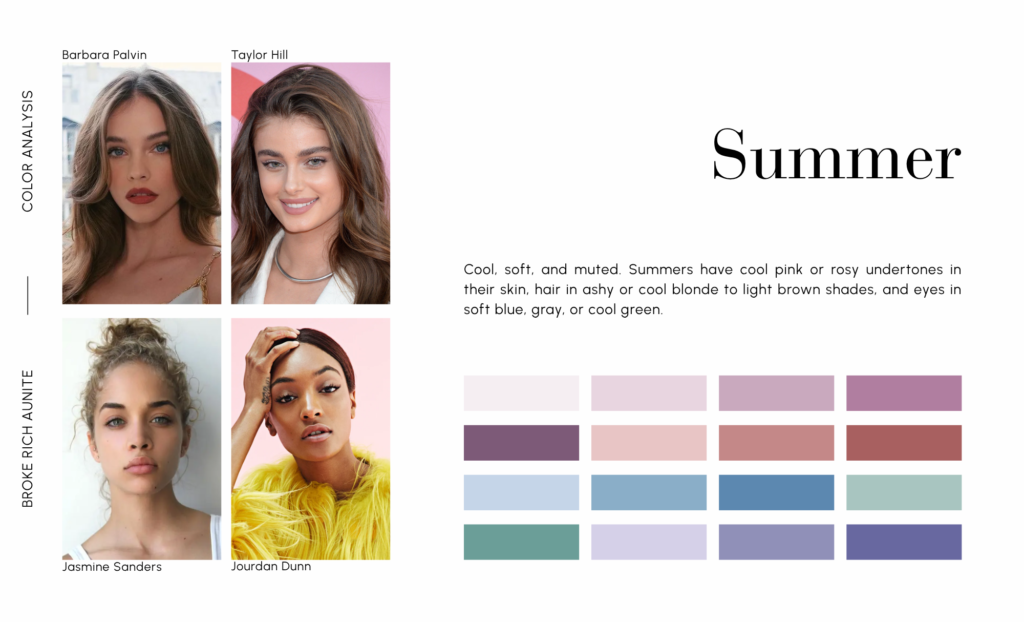
Summer is cool, soft, and muted. Summers look best in the hazy, dusty end of the spectrum — soft roses, cool lavenders, muted blues, and greyed-out greens. Bold and saturated tends to overpower rather than complement.
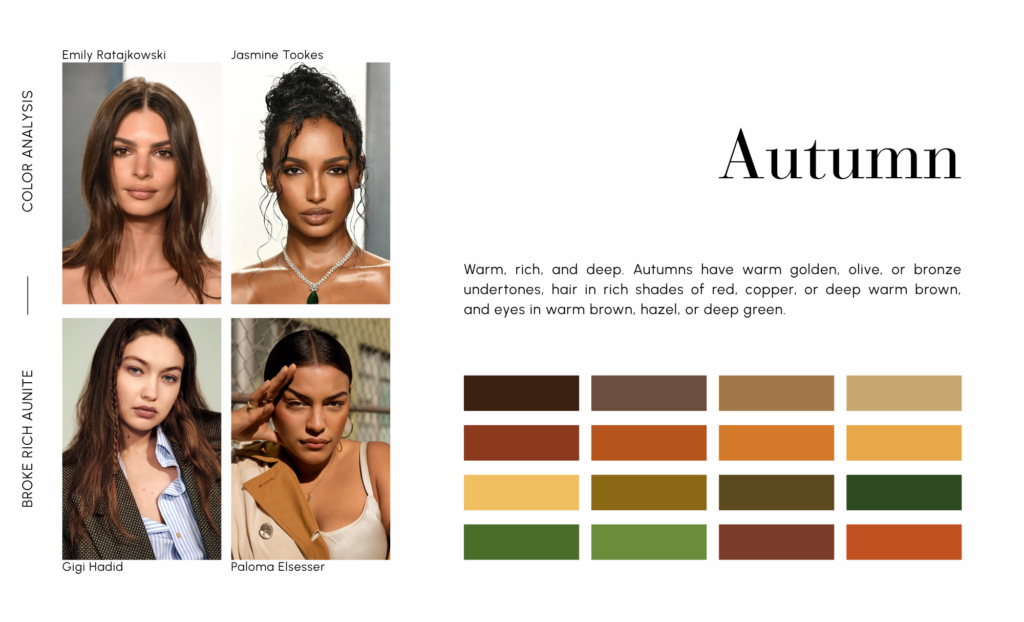
Autumn is warm, rich, and deep. Autumns were made for the earthy, grounded palette that comes with the season — terracotta, rust, olive, moss, deep warm browns. These are colors with weight, and autumns can carry them.
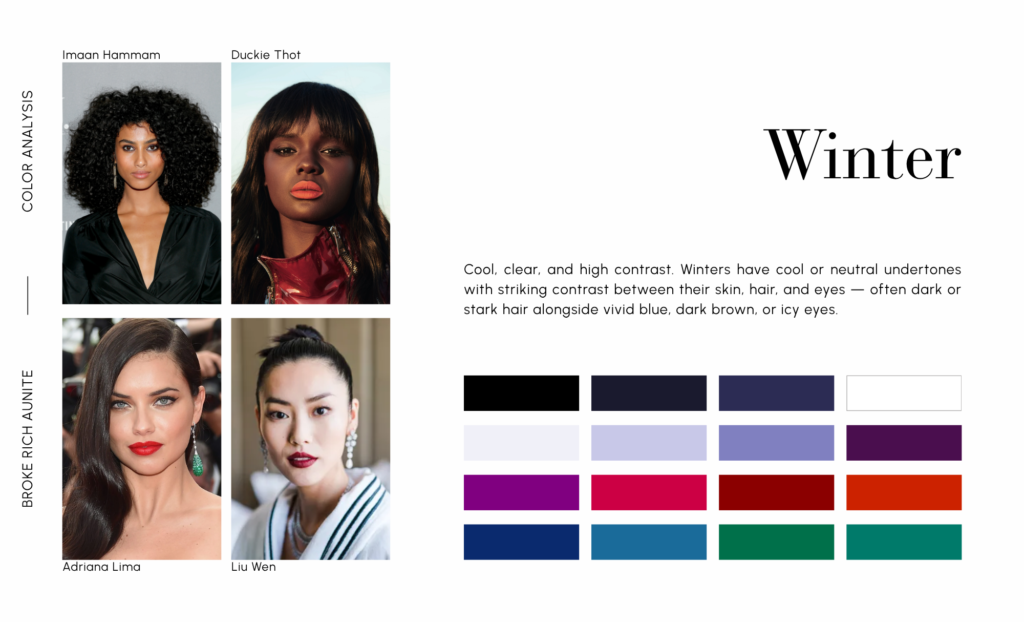
Winter is cool, clear, and high contrast. Winters are the ones who can actually pull off true black, pure white, and jewel tones without looking like they’re wearing a costume. The bolder, the better.
Each of these four also breaks into sub-seasons — bright, true, soft, light, dark — for when you want to get more specific about the nuance in your coloring. But starting with the main four is more than enough to start making better decisions.
So how do you find yours?
The DIY version involves looking at your undertone (warm, cool, or neutral), your natural hair depth, and the clarity of your eyes. The classic test is holding gold versus silver fabric near your face in natural light — whichever makes your skin look more awake is a clue. It’s a decent starting point, but self-analysis gets slippery fast. Most of us have colored hair, wear makeup daily, and are genuinely not great at seeing ourselves without a filter — literally and figuratively.
I got my analysis done through Curate Your Style, a London-based color and personal styling service that works with clients internationally. I came back as a Bright Winter, and honestly it confirmed things I’d been circling around for years without having the language for it. They offer online seasonal analysis, so geography isn’t an excuse. If you want the real answer, that’s where I’d send you.
Let’s talk money, because this is still Broke Rich Auntie and the numbers have to make sense. Curate Your Style runs both virtual and in-person options, and the price gap is real. Their online packages run £33 to £95 depending on the tier (Bronze, Silver, Gold), while the in-person Mayfair studio visit runs £100 to £180 for the same tiers. I went the virtual route, did the Silver package for £60, uploaded my photos, and had my results back within a few days. You’re paying for the analysis itself, not the ambiance, so unless you’re already in London and want the full experience with drinks in their styling room, virtual gets you the same answer for less.
Why this actually matters for your closet
Here’s where it gets practical, because this is ultimately a styling tool, not just a fun result to post.
When you’re doing a closet detox — and we will be talking about closet detoxing — your season gives you a concrete filter. The pieces you keep skipping over every morning? There’s a good chance they’re sitting in the wrong part of your palette. That’s not a willpower issue, that’s a color issue.
And when you’re shopping for new things, knowing your season is the difference between buying what’s pretty and buying what’s going to work. It narrows the field in the most useful way. Less second-guessing, less returning, fewer pieces that seemed right in the store and wrong at home.
Color is one of the fastest ways to look more pulled together without changing anything else about how you dress. Knowing yours is a shortcut, and I’m always here for a good shortcut.